Table of Contents
It's additionally worth keeping in mind that therapists can take wellness insuranceand while some forms of insurance coverage might cover certain kinds of mentoring, you'll normally pay out of pocket for mentoring sessions. Because of strict policies, certified therapists need to often restrict their relationship (and interaction) with clients to what happens throughout sessionshowever, instructors aren't under that very same required.
Due to the fact that it prevails for instructors to offer message, email, and even phone and video clip support for customers between sessions (which isn't the instance in therapy), it can mean that the client-coach partnership may feel "closer" sometimes than a client-therapist partnership, says Preston. This does not suggest you can't develop a close partnership with your specialist, too.
Due to the fact that of this, you could experience more of an all-round health shift. "You can really feel close to your therapist due to the fact that they offer a non-judgmental space to share anything on your mind," states Aramyan. "They're able to reserve that space for you to process any kind of emotions or experiences all the while confirming you and your challenges.
Instructors aren't limited from sharing stories regarding themselves with their customers. You might be more likely to hear concerning your instructor's individual life and experiences than, state, your specialist's. Specialists and trainers both prioritize discretion, accredited therapists are likewise legally called for to stick to the Health Insurance Policy Portability and Liability Act (HIPAA), while life coaches aren't.
Postpartum Support: Understanding PPD in Napa, CA
"A client should consider working with a life coach over a specialist when they have attained stability in their lives and are looking to amplify the success they've currently visualized," Preston states. "If they prepare to choose, do something about it, and develop outcomes by finding out to comprehend and trust themselves, then training is an excellent fit."You may also find that collaborating with both a trainer and a specialist is the best of both worlds.
As a fundamental instance: If you're seeing a therapist for stress and anxiety, your specialist could give a diagnosis, instruct you concerning your signs, and advise dealing strategieslike an everyday walk, for instanceto assistance, claims Cheyenne. Your life coach could be able to help you stay answerable in between your therapy sessions or even show up and stroll with you for responsibility, she says.
If training appears up your street, the most effective means to find an ICF-certified trainer gets on the ICF website, claims Preston. You can additionally find a selection of instructors on social networks, yet to ensure you're obtaining "the most genuine support," Preston urges seeing to it they are ICF-certified. To discover an accredited specialist, you can search online, try to find "in-network" carriers via your medical insurance, or begin by talking with your medical care physician, Lawrence states.
This is a good opportunity to feel points out, ask questions, and make certain you're a straightened fit. Every expert is different, so it might take a while to find the very best suitable for you. No matter of the direction you pick, bear in mind: There's no pity in requesting aid. Meguire Hennes is a freelance lifestyle reporter concentrating on fashion information, celeb style, dating, and wellness (her Libra moon will not let her pick one beat).
Postpartum Anxiety: The Undiagnosed Disorder
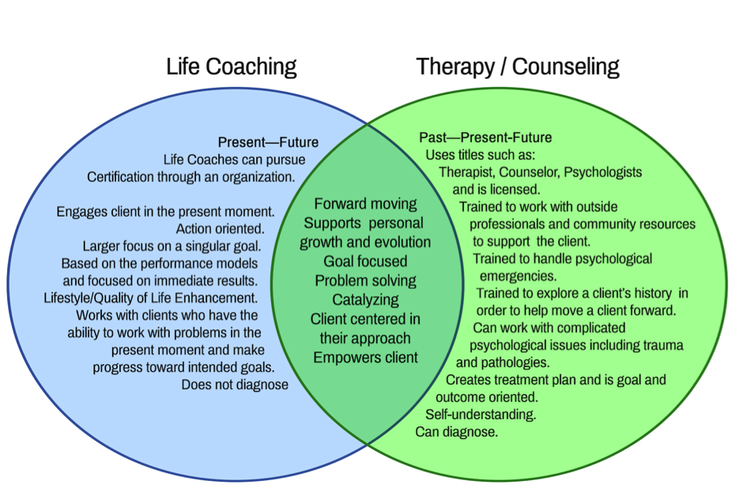
Possibly you're also under the impact that there isn't a difference. Well, to sum things up succinctly: THERAPY and LIFE MENTORING are not the very same and each serves a various function. What's the difference between a life trainer and a therapist?
It's a simple matter of selecting the right method that shows your psychological wellness and life objectives. Therapy, likewise frequently referred to as psychotherapy or therapy, is made to be a lasting process between a patient and their specialist.
A life train aids their clients set objectives, hone in on reliable behaviors, and conquer specific obstacles like procrastination on preparing for a public speech. A train serves as a sort of coach to assist the customer concentrate on what can be altered currently and for the futureinstead of attending to events that have occurred in the past.
How Partners Work Benefits Family Units
We'll go right into more granular details of the differences in between coaching vs. therapy listed below. In basic, life coaches are PRESENT AND FUTURE FOCUSED. Life instructors aid their customers explore their past only as a way of recognizing their present life experiences and belief systems. Their key objectives are to assist a client take a look at where they are, where they intend to be, and just how to obtain from point A to factor B.
Make an action strategy to launch favorable adjustment. Boost your self-confidence. Discover a work-life equilibrium. Inquiry limiting ideas about your potential. Reframe previous experiences with a strong emphasis on making adjustments for the here and now and future you. Recognize, set, and achieve objectives. Take real action and determine the outcomes. Adapt to life adjustments successfully.

While a specialist may function with clients to establish objectives and make modifications, primarily clients come to them seeking aid with recovery trauma, getting rid of misuse, dealing with addiction, or dealing with psychological health problem. Because specialists have actually a specialized grad level and medical training, they have an extensive foundation of expertise regarding the mind, biology, and human actions.

Navigation
Latest Posts
How Individuals Consider Acceptance and Commitment Therapy for Support
When Gottman Method Strengthens Family Units
Tools and Techniques for Daily Mental Wellness Through Depression Therapy